
Paint piping cleaner SL-709U
なし
Tags: paint cleaner, paint piping, thinner alternative
Introduction
| SL-709 is a cleaning agent for paint piping. Paint can easily adhere to or clog horizontal piping, joints, ball valves, and color changers, and cannot be removed with paint thinner. |
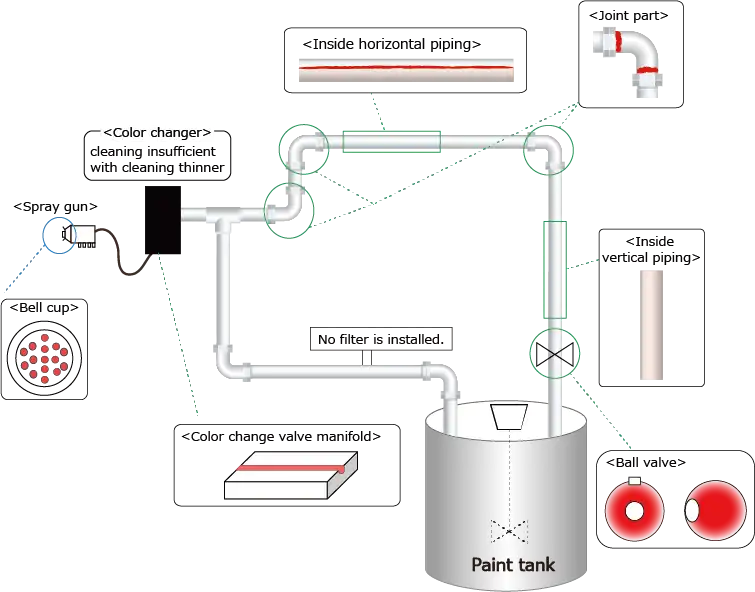 the image of paint path |
| Horizontal piping | The top of the piping is hollow, and the paint solidifies at the draft surface. |
|---|---|
| Joints | Paint clogs up on threads and joint steps. |
| Ball valves | Paint adheres to ball exterior walls. |
| Color changer | Paint adheres to paint passage diameters such as color change valve manifolds. |
Advantage of SL-709U
 |
High dissolving power |
No need for neutralization process |
How to use
For cleaning of paint piping at color changing
- Discharge paint from the paint tank
- Put a pipe cleaning agent SL-709U into the tank, circulate and clean inside the pipe.
- After cleaning with SL-709U, rinse with thinner for diluting paint.
General characteristics
| Application | Mask jig | ― |
|---|---|---|
| Bell cup / Gun | ○ | |
| Paint piping | ○ | |
| pH | Neutral | |
| Effects on metals | Al | △ |
| Cu | ○ | |
| Fe | △~× | |
| SUS | ○ | |
| Ni plating | ○ | |
| Operating temperature | Room temperature to 50℃ | |
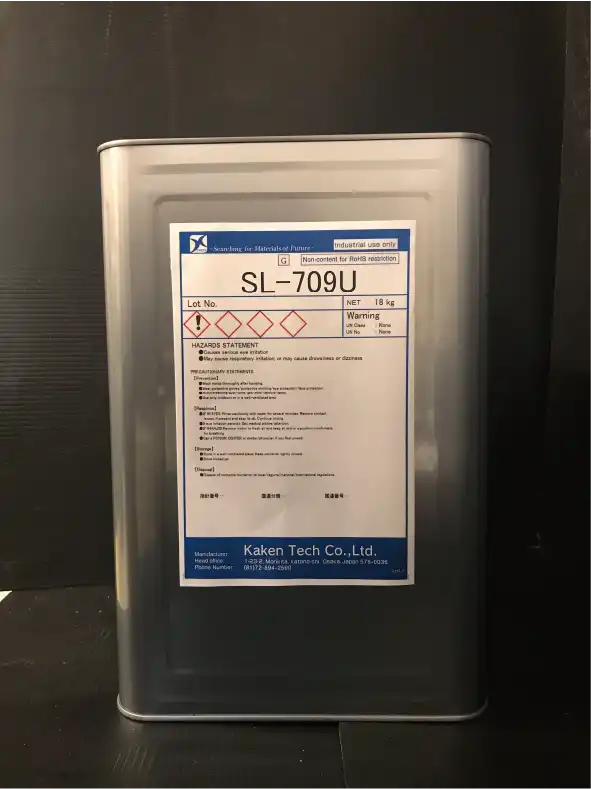
| Packaging | 18 kg/can | |
Related articles
 |
Trouble solution
|
|---|---|
 |
Trouble solution
|
お問い合わせ
- 日本国外の方は英語ページでお問い合わせください。
- お問い合わせいただくにあたって、下記の項目を正確にご記入下さい。
- お問合せ内容によっては、ご返事を差し上げるのにお時間をいただくこともございます。
- ※お問い合わせフォームからのセールス等は固くお断りいたします。送信いただいても対応いたしかねます。

